
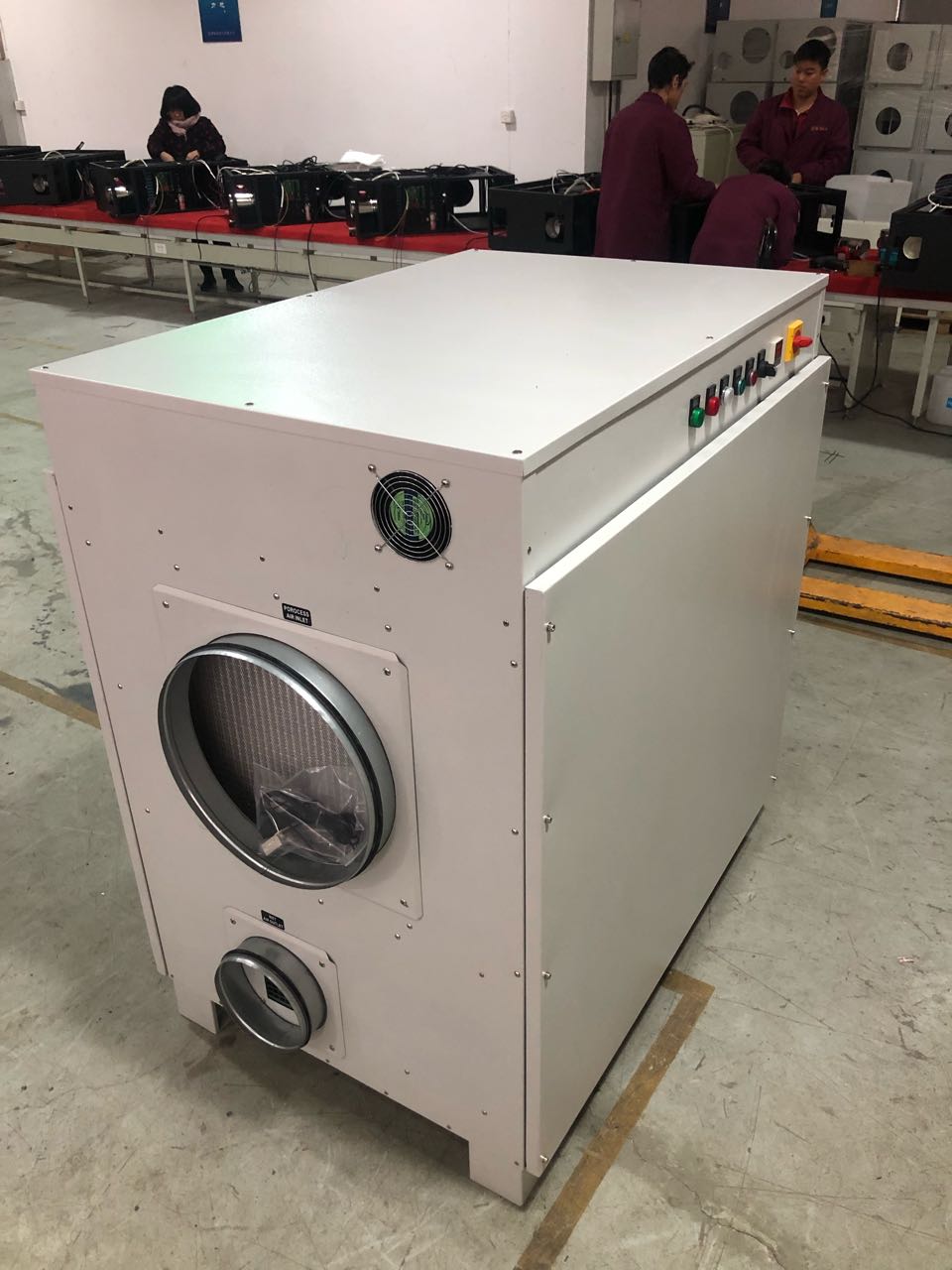
Desiccant dehumidification technology is more energy efficient than other technologies such as refrigeration, in achieving the required air conditions.
1. Storage and transport of raw materials: dry air is needed here to prevent the risk of the proliferation of bacteria and the obstruction of systems for the transport and storage of the granular materials: silos and conveyer belts. In these instances the savings are clear, derived as they are from an absence of stoppages for breakdowns and the rejection of stored material prior to production.
2. Product quality and the time devoted to processes such as the drying of the product using atomization towers, fluidized beds and the coating process, are essential to ensuring constant high-quality production. Desiccant rotor air dehumidifiers enable operations to continue unhindered by problems throughout the year. Weighing and mixing processes are also normally undertaken in controlled humidity conditions to increase the effectiveness of the process.
3. Blistering, wrapping, packaging and filling: the packaging of products must be studied in detail to prevent humidity from causing damage. It is vitally important to control humidity during this process to increase the lifetime of the product and conserve its properties intact. The weighing and mixing processes are also usually undertaken in controlled humidity conditions to make the processes more effective.
4. Storage of products in cold storage chambers: a large number of examples of applications include the pharmaceutical and food products are stored at low temperatures to improve their conservation. The entry of humid air from outside can cause condensation and the formation of ice on products and machinery.
5. One of the variables that must be controlled in Clean Rooms in research and production centres is the humidity. To this end, CONLOON manufactures units with a wide-range of specifications able to highly efficiently treat and filter the air in conditions of up to -70 C dew point.
Desiccant rotor air dehumidifiers enable the drying of air at low temperatures and very low dew points. Installation is simple and solves problems once and for all, while also greatly reducing overall energy consumption.


