
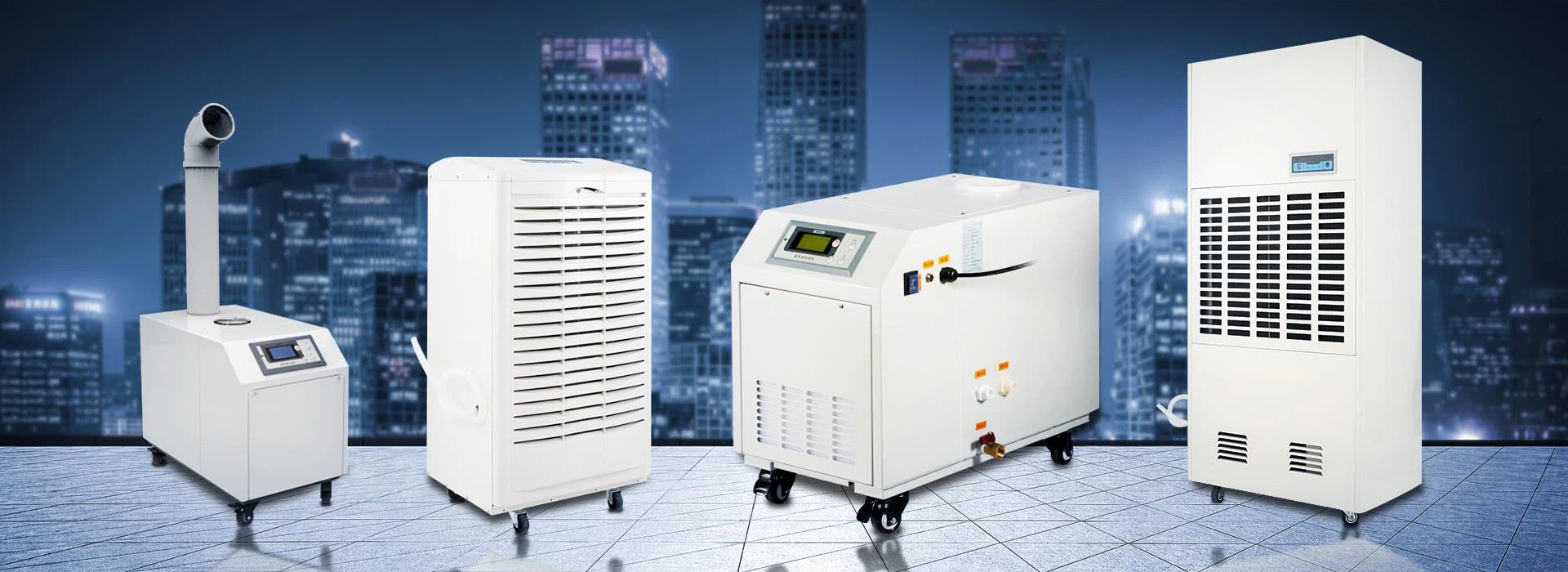


I. Overview
The main producers of global dehumidifiers are concentrated in Italy, Japan, China and Taiwan, and China's position in the global dehumidifier market is increasingly prominent. In particular, industrial dehumidifiers are used in medicine, hospitals, electronics, computers, and food industries; household dehumidifiers have only just started in China's domestic market and have not been fully recognized by Chinese consumers.
Second, a brief history of development
Dehumidifiers have been in the Chinese market for decades. But the dehumidifier has been in the initial state. Dehumidifiers have very limited market capacity in China. Only the export that supports the growth of dehumidifiers for many years. Since the beginning of the 21st century, the country's major producers of dehumidifiers have exported more than 200,000 units. In the next five years, it quickly grew to 2.05 million units. In that year, the total domestic sales were 2.5 million units, of which nearly 96% were for export. I have to say that China has taken a new ladder in five years. However, in the following days, the dehumidifier industry was affected by raw materials, and the profit situation was not optimistic. The main reason for the market size of China's dehumidifiers is consumption awareness and consumption levels. In addition to this, there are product technologies, publicity, and so on. Therefore, China's dehumidifier market has yet to be developed.
Third, the current situation of dehumidifier analysis
The situation in the field of industrial dehumidifiers is very different. The industrial dehumidifier is mainly based on the domestic market. Its sales account for 60% of the total domestic sales, and the sales ratio exceeds 90%. The market for commercial machines has not really developed. The sales situation is similar to that of the home machine, and it is in a relatively passive situation. Dehumidifiers are used in many units and locations, but they are not well understood and are not included in the scope of procurement. There are also very few procurement bidding projects for dehumidifiers. Customers need to take the initiative to dig, and they need “curve” marketing. Even the dehumidifier is only allocated to users as an accessory product.
Fourth, the consumer group of industrial dehumidifiers:
1, the demand for the product is not complicated, as long as it can meet the dehumidification, but the sensitivity to the price is higher;
2, is a strong unit and some research institutes and other institutions, the performance requirements of the machine is higher, the price is a secondary consideration.
Among domestic manufacturers, dehumidifiers are early involved in the field of dehumidifiers, and Gree has grown rapidly in recent years. Many large companies have voluntarily given up the domestic market due to various factors, such as market maturity and consumer price acceptance.
Fifth, the brand pattern
In the dehumidifier industry, there are still no brands and enterprises that have truly formed scale. In 2010, there were only a handful of companies with sales revenues exceeding 100 million yuan. Most of the enterprises have sales revenues of less than 20 million yuan. The brand structure is only a prototype. There are two main reasons for this situation:
First, smaller market demand has affected the development of the industry. The market capacity of the dehumidifier industry is less than 2 billion yuan, and the domestic market is very small. Under the circumstance of no market demand, enterprises pay less attention to the product. The dehumidifier can only become a subsidiary small product, and the professional dehumidifier Enterprises do not have enough strength to promote.
Second, there are many types of dehumidifier products, and the application fields are also complicated, resulting in disordered sales channels, and the demand for each product is relatively small, which also causes difficulties for enterprises to promote and sell. Judging from the short-term development of the dehumidifier, this situation will remain for a long time. Although the demand in the domestic market has grown rapidly in the past two years, the absolute amount of market demand is still limited. It is difficult for many powerful brands to intervene, and the leading brands naturally cannot be formed. However, as a subdivided market, the market and profit margin of the dehumidifier industry still exist objectively, so it will attract new brands to enter.
Six, product features
There are two main types of dehumidifiers. First, professional dehumidifiers are dominated by household and commercial dehumidifiers. These companies have obvious advantages in technology and domestic and international sales channels. Second, industrial enterprises are mainly industrial constant temperature. Wet air-conditioning units are well-known. These companies have high technical content and sales channels are mainly engineering projects, which is the largest resource for traditional commercial air-conditioning enterprises.
Seven, upstream support
There are two main types of compressors for dehumidifiers, namely reciprocating and rotor type. Because the technical threshold is not high, the general reciprocating compressor and rotor compressor companies can produce, so there are many suppliers, almost all manufacturers involved, but the problem is small. The supply of dehumidifier compressors is more seasonal, and the months of mass supply are concentrated in June to October each year. The other months are small and scattered. Therefore, compressor suppliers generally stagger the production of dehumidifier compressors and air conditioner compressors.
Eight, dehumidifier market prospects
There are two different voices in the industry regarding the future of the dehumidifier industry in China. The optimists believe that although the Chinese dehumidifier market has a small base, the prospects are worthy of recognition as the economy develops and the quality of people's lives improves. In the next few years, the popularity of dehumidifiers in Chinese households will be the same as the popularity of household air conditioners. The commercial side will also make great progress, and the development is very fast. This is a good proof.
Conservatives believe that the prospects are relatively speaking. If more big brand big companies participate in this market in the future, it will be difficult to have a living space for the brand, and the market will be reshuffled.
The maturity of the dehumidifier market will take a long time, and technological upgrading, product function and appearance diversification are also issues that the industry needs to solve. In addition, the country needs to introduce relevant standards to guide the promotion and regulation of the dehumidification equipment market. I believe that under the efforts of many parties, the dehumidifier may have a different tomorrow in the near future.
Nine, the status quo of the market
When the domestic dehumidifier products are entering the maturity period as a whole, the profit of their products has been very transparent, and the conventional model dehumidifiers can only compete in price reduction in the face of fierce competition. In addition to reducing production and operating costs, dehumidifier companies are pursuing a new wave of economic inflation. In addition to reducing production and operating costs, it is more important to subdivide the dehumidifier market. The dehumidifier market is divided into the market for conventional standard model demand and the market for non-standard products, and the product market is focused on the latter. The so-called non-standard dehumidifier is a dehumidifier product customized according to the actual working conditions of the customer site. Ningbo Deye Daily Electrical Appliance Technology Co., Ltd. has successfully developed multi-functional household dehumidifiers (for homes, offices, etc.) in response to market demand; large-scale industrial dehumidifiers (for underground projects such as subways and civil air defenses); pipeline dehumidifiers ( Used in places with high purification level); rotary dehumidifier (applicable to places with high humidity requirements); high/low temperature dehumidifiers (applicable to drying workshops, refrigerated warehouses, etc.); ceiling dehumidifiers (applications) In the hotel, shopping malls and other places) and other related dehumidification refrigeration peripheral equipment.


