


When the humidity was abnormal at that time, the on-site conditions of the adhesive sheets were as follows: All on-site tables and chairs, benches, glass, equipment, wafers, chips, and anti-static clothing for the human body had serious water vapor on the surface, and the water vapor on the glass made people see indoors. Without the passage, touch the surface of the table and chair equipment with your hand, and there is an obvious finger watermark. What's more serious is that there are many chips kept on site during the bonding process. These products include other series of products, just like going through a "steam bath".
Afterwards, an ultrasonic scan was performed on the unqualified crystals in the cards with extremely high reject rates, and it was found that there were different degrees of delamination. After anatomy, it was found that there were cracks, gold wires broken, and cracks in some chips from the delamination. Finally came to the following conclusions:
(1) The main reason for the decline in yield is the cracks in the package separation layer, which leads to chip cracks or gold wire breakage.
(2) The reason for the delamination is that the water vapor envelope on the surface of the chip is generated in the plastic package. It can be seen that temperature and humidity have a significant impact on the production of integrated circuit packaging.
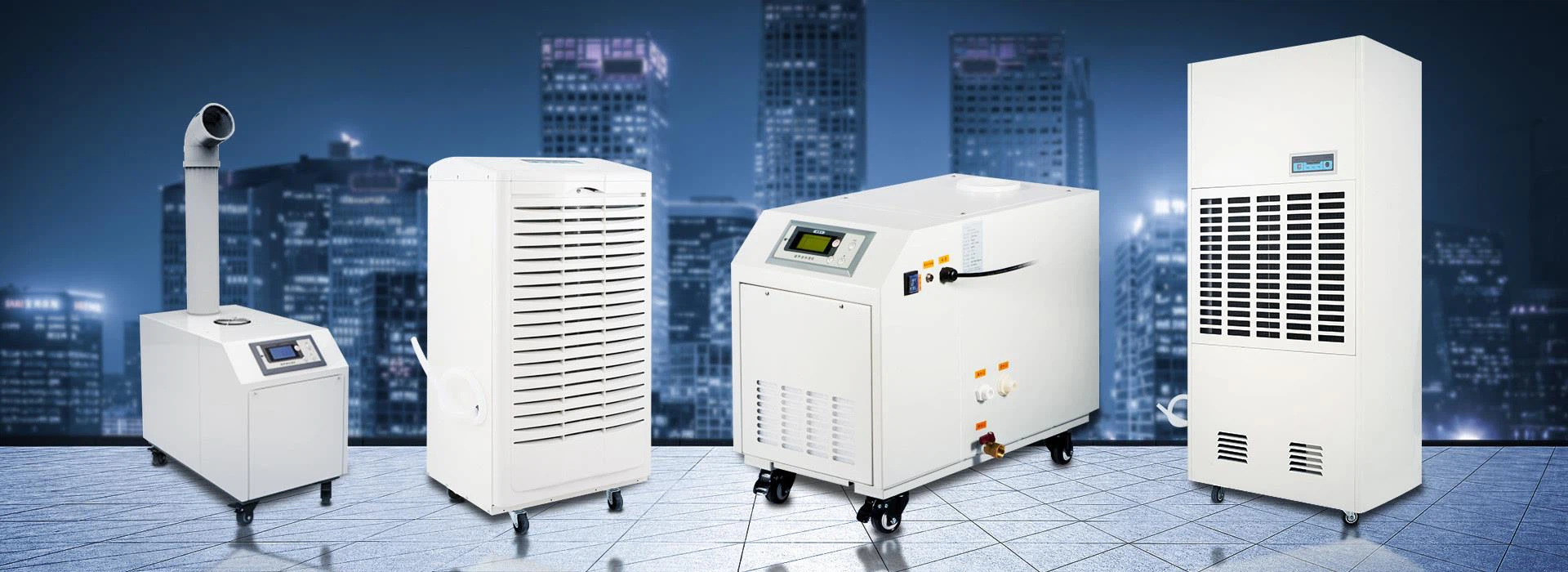
Industrial dehumidifier
Due to humidity problems caused by various reasons such as water quality and heat sources, the normal work of the program control room, computer room, and electronic field is also troubled. This is only the demand for dehumidifiers in the electronics industry, and many other industries also need industrial dehumidifiers.
Industrial dehumidifiers can solve the problem of excessive humidity in industrial production. The use of industrial dehumidifiers to control humidity provides a good working environment for industrial production and plays an important role in improving product quality!
In order to save costs, many dehumidifier manufacturers try to maximize the space. For example, the basement is mostly used as a warehouse to store items. However, the basement is below the surface, and the warehouse without industrial dehumidifiers will get wet in the rainy season. The air flow is small and it is difficult to spread. Therefore, the basement is wetter than the above-ground room, which is very disadvantageous for the storage of finished products and goods that require humidity. So, the trouble comes, how to keep the basement warehouse dry and control the humidity value of the basement? This is an important question.
The temperature is not high, the humidity is too high, the raw materials, semi-finished products, and finished products in the production of the enterprise are lost in the warehouse process, various production equipment is rusted and corroded, and the quality of the products is greatly reduced. Therefore, an industrial dehumidifier is needed to completely solve the troubles. Of course, there are also economical dehumidification methods for artificial dehumidification of moisture-absorbing materials such as lime. It is also possible to install an exhaust box for ventilation, but the results have proved to be ineffective.
With the rapid development of science and technology, the most direct and effective method is to use industrial dehumidifiers. The popularity of dehumidifiers is now doubling year by year. Because of its powerful functions and convenient use, it can control the humidity value in the air and keep the basement in a constant humidity state. The industrial dehumidifier has an automatic humidity control system. Users can freely set the humidity value of the dehumidifier suitable for the basement according to the effect they want, automatically control the stop of the dehumidifier, achieve the most efficient dehumidification effect, and greatly improve the efficiency of the equipment. Save unnecessary expenses.


