Latest Products


Contact Us
- No.116, Changda Rd, Yuhang District, Hangzhou, Zhejiang, China
- eva@conloon.com
- +86-571-81600072


Dehumidifier Humidity
Micro-computer humidity setting, automatic induction, automatic control.
Description
Dehumidifier Humidity


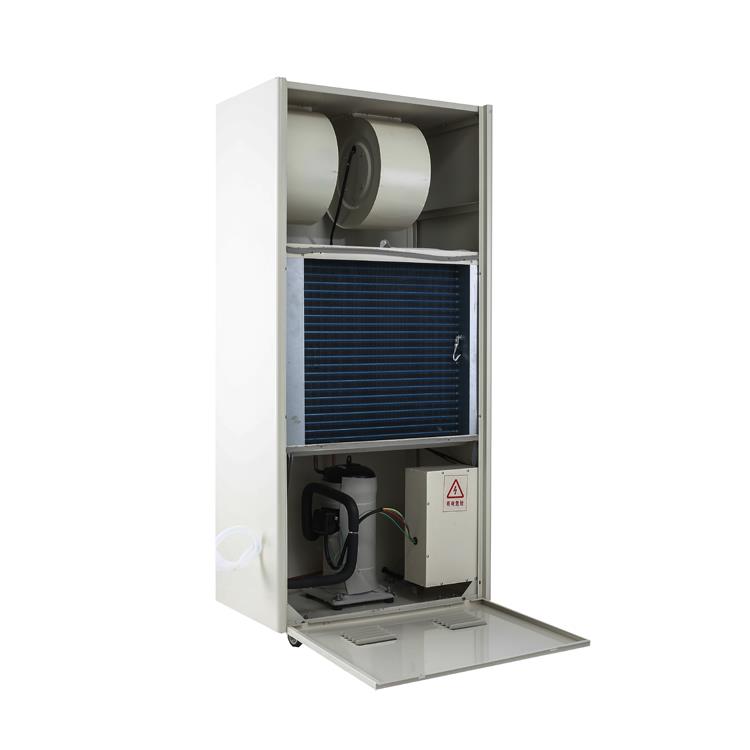
Dehumidifier humidity sensor knowledge
Dehumidifier humidity sensor knowledge The hygroscopic material that can be used to make the dehumidifier humidity sensor must meet the basic conditions that the humidity-resistance (or capacitance) characteristics are reversible, and should have good repeatability. Humidity sensors made of these materials are combined with appropriate circuits to form a corresponding humidity measuring instrument. A hygrometer based on measuring changes in resistance or capacitance of a hygroscopic substance is generally referred to as a humidity sensor. Dehumidifier humidity sensors mainly include lithium chloride humidity sensor, alumina humidity sensor, carbon and ceramic humidity sensor, and high polymer film and various inorganic compound crystals such as lithium niobate, cadmium sulfide, sodium chloride, etc. Resistive humidity sensor, etc. The following is a brief introduction to various humidity sensors.
1. Lithium chloride humidity sensor
(1) Resistive lithium chloride hygrometer The first lithium chloride electric humidity sensor based on the principle of resistance-humidity is developed by F.W. Dunmore of the American Bureau of Standards. The component has high precision, and has the advantages of simple structure and low cost, and is suitable for a series of advantages such as measurement and control of normal temperature and humidity. The measurement range of the lithium chloride element is related to the lithium chloride concentration of the moisture sensitive layer and other components. The effective moisture absorption range of a single component is typically within 20% RH. For example, a concentration corresponding to a concentration of 0.05% is about (80 to 100)% RH, and a concentration corresponding to a concentration of 0.2% is (60 to 80)% RH. It can be seen that when measuring a wide range of humidity, it is necessary to combine different concentrations of components. The number of components of the hygrometer combination that can be used for full-scale measurement is generally five, and the lithium chloride hygrometer using the component combination method can usually measure (15 to 100)% RH, and some foreign products claim that the measurement range is up to ( 2 to 100)% RH.
(2) Dew point lithium chloride hygrometer Dew point lithium chloride hygrometer was first developed by Forboro Company of the United States. After that, China and many countries have done a lot of research work. This hygrometer is similar in form to the above-mentioned resistive lithium chloride hygrometer, but the working principle is completely different. In short, it works with the saturated vapor pressure of a saturated aqueous solution of lithium chloride as a function of temperature.
2. The carbon humidity sensor carbon humidity sensor was first proposed by EK Carver and CW Breasefield in the United States in 1942. Compared with the commonly used sounding elements such as hair, casing and lithium chloride, the carbon humidity sensor has a response speed. The advantages of fastness, repeatability, no erosion effect and narrow hysteresis loop are remarkable. In the early 1970s, China's meteorological department carried out the development of carbon humidity sensors, and achieved positive results. The measurement uncertainty is no more than ± 5% RH, the time constant is 2 to 3 s at positive temperature, and the hysteresis is generally 7 About %, the stability of the specific resistance is also good.
3. Alumina Hygrometer
The outstanding advantage of the alumina sensor is that the volume can be very small (for example, the humidity sensor for the sonde is only 90μm thick and 12mg), the sensitivity is high (the lower limit of measurement is -110°C dew point), and the response Fast speed (generally between 0.3s and 3s), the measurement signal is directly output in the form of electrical parameters, greatly simplifying the data processing program, and so on. In addition, it is also suitable for measuring moisture in liquids. The above characteristics are desirable in certain measurement areas in industry and meteorology. It is therefore considered to be one of several desirable sensors for high altitude airborne detection. It is also because of these characteristics that people have a strong interest in this method. However, unfortunately, although many professionals in the country have made unremitting efforts to improve the performance of the sensor, they have not been able to explore the process conditions of products with stable production quality and improve the stability of performance and other important issues related to practicality. A major breakthrough was made. Therefore, sensors have so far only been used under certain conditions and within a limited range. In recent years, this method has begun to emerge in the field of low frost point measurements in the industry.
4. Ceramic Humidity Sensor
In the field of humidity measurement, the measurement of low humidity and high humidity and its low temperature and high temperature conditions is still a weak link so far, and the humidity measurement technology under high temperature condition is the most backward. In the past, the ventilated dry and wet bulb hygrometer was the only method that could be used under this temperature condition, and the method also had various problems in actual use, which was unsatisfactory. On the other hand, advances in science and technology require more and more humidity measurements at high temperatures, such as cement, metal smelting, food processing, and other industrial processes involving process conditions and quality control for humidity measurement and control. Therefore, since the 1960s, many countries have begun to develop humidity sensors suitable for measurement under high temperature conditions. Considering the conditions of use of the sensor, it is natural to focus on the exploration of certain inorganic substances that are both water-absorbing and high-temperature resistant. Practice has proven that ceramic components not only have moisture sensitive properties, but also function as temperature sensing elements and gas sensing elements. These characteristics make it highly likely to be a promising multi-function sensor. Temple, Fukushima, and Xintian have already taken a very successful step in this regard. In 1980, they developed a multi-function sensor called "wet porcelain - II type" and "wet porcelain - type III". The former can measure temperature and humidity, mainly used for air conditioning, the latter can be used to measure humidity and various organic vapors such as alcohol, mainly used in food processing. The above are several types of sensors that are used more frequently, and there are other humidity sensors developed according to different principles, which are not introduced here. Humidity sensors are widely used in the field of dehumidifiers, and the accuracy of dehumidifier humidity sensors has become a topic of great concern to the people.
Hot Tags: dehumidifier humidityChina, manufacturers, suppliers, factory, wholesale
You Might Also Like