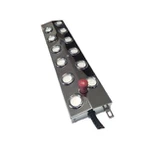
Latest Products


Contact Us
- No.116, Changda Rd, Yuhang District, Hangzhou, Zhejiang, China
- eva@conloon.com
- +86-571-81600072


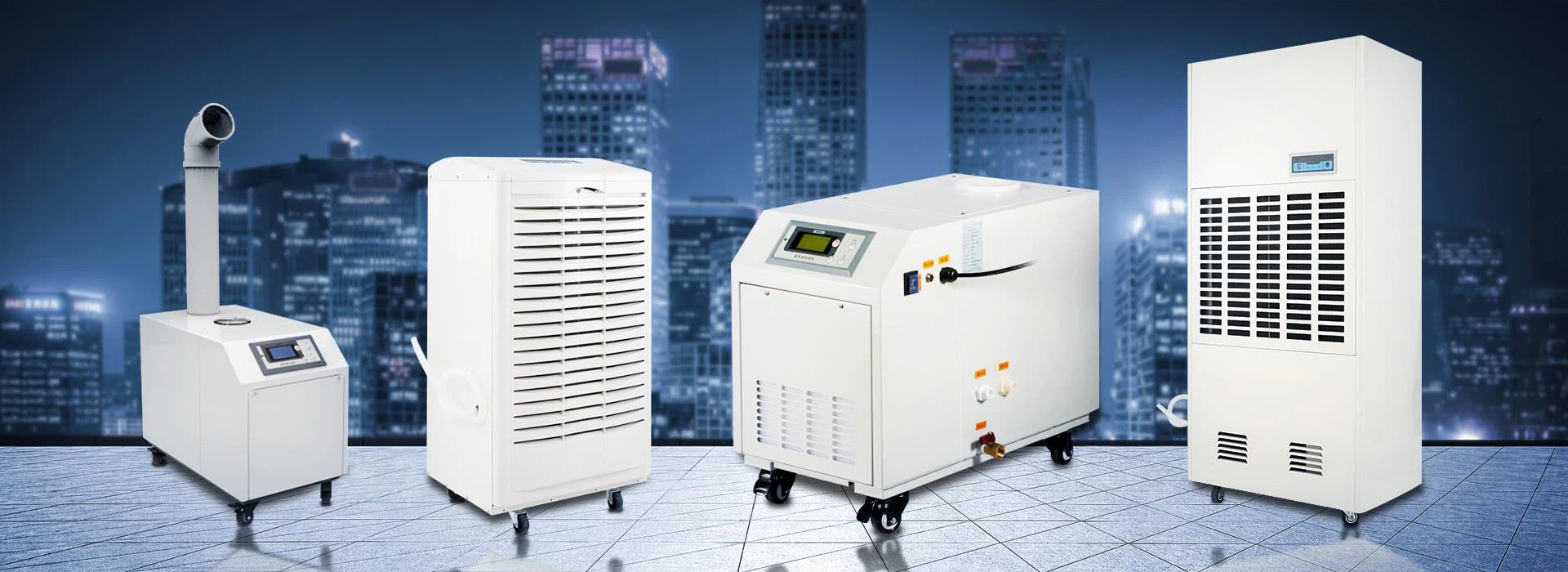
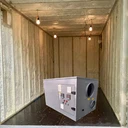
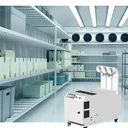
Humidifier Ultrasonic Industrial
Micro-computer humidity setting, automatic induction, automatic control.
Description


Analysis of Factors Affecting the Performance of Ultrasonic Humidifier
Humidification is one of the main means of humidity control of air conditioners. There are many ways to achieve humidification. At present, the humidification methods used in air conditioning projects mainly include steam humidification, water spray humidification, ultrasonic humidification and wet film humidification. Among them, the two humidification methods of steam humidification and water spray humidification are applied earlier, the equipment principle is relatively simple, the performance influence factors are less, and the engineering design method is relatively mature, so it is widely used in air conditioning engineering. Ultrasonic humidification is a relatively new method of mixing and humidification compared with the first two humidification methods. With the development of technology, ultrasonic humidifiers are becoming more and more mature in technology. In recent years, the application of civilian ultrasonic humidifiers in households has been quite It is common, but because the ultrasonic humidifier has the least humidification, its application in air conditioning engineering is still narrow, and there is less experience in design and use. Due to the many factors affecting its performance, if some performance influencing factors are not considered in practical applications, the actual humidification amount may be much lower than the rated humidification amount of the product. The author found the humidification amount of the ultrasonic humidifier measured in a certain project debugging. Only 50% of the product's signage value. Based on the experience and practical application of the project, this paper analyzes the performance influencing factors, and the analysis results can be used for similar engineering design and operation reference.
1 ultrasonic humidifier structure
The basic working principle of the ultrasonic humidifier is to make the metal diaphragm generate ultrasonic vibration through a special circuit, so that the water above the diaphragm is atomized into fine water droplets of 1 ~ 5μm, the water mist is diffused into the air, and the humidification is achieved by gasification. . The utility model has the advantages of small equipment volume, no need of steam source, low noise, small water mist diameter, high humidification efficiency, fast response speed and low energy consumption. However, because of its small amount of humidification, it can usually only be applied to a case where the amount of humidification is small. Industrial ultrasonic humidifiers mainly include floor-standing, wall-mounted, air duct concealed, and air duct inhalation. Air-conditioning engineering mainly uses air duct concealed type, so this paper uses it as a research object for analysis. The air duct concealed ultrasonic humidifier usually includes four parts: a humidifier, a distribution box, a controller, and a water softener. In order to solve problems such as rust and corrosion in a humid environment, the humidifier housing is usually made of plastic. The humidification performance of ultrasonic humidifier has many influencing factors. It is related to the wind speed, temperature, humidity and installation position of the airflow. The main performance influencing factors are analyzed below.
2 wind speed effect
Through actual observation, it is found that the wind speed has an important influence on the humidification amount of the air duct concealed ultrasonic humidifier, and the humidifier is greatly increased in the case of blowing in the case of no wind. This is because under the windless state, the atomized water mist accumulates on the water surface, forming a dense fog layer, which seriously affects the continued atomization of the water. The flowing air can quickly take away the water mist above the vibrating diaphragm of the humidifier, so that it cannot form a dense fog layer that hinders the diffusion of the water mist, thus greatly increasing the atomization amount of the humidifier. However, after the wind speed is 3m/s, its influence on the humidification amount is small, and the excessive wind speed will affect the stability of the water level of the humidifier sink. Therefore, the wind speed at the ultrasonic humidifier should be controlled at 3-6m/s. In addition, the wind speed has an influence on the gasification distance. The higher the wind speed, the longer the gasification distance. In order to reduce the gasification distance, the wind speed of the gasification section should be less than 4 m/s.
3 air temperature and humidity effects
The water mist generated by the ultrasonic humidifier must be vaporized to achieve humidification of the air, and the gasification effect is related to the temperature and relative humidity of the airflow. The higher the temperature and the lower the relative humidity, the better the gasification effect. The shorter the required distance, the ultrasonic humidifier should be installed in a higher temperature position in the air conditioning system. If it is set in a fresh air system, there must be a heater in front of it to heat the air above 20 °C, and pay attention to the problem of frost protection. According to the data, the gasification distance is about 1.5m in an environment with a wind speed of 2m/s, a temperature of 20°C and a relative humidity of 50%. The influence of airflow temperature, relative humidity and wind speed on the gasification distance is very complicated. The specific relationship between these four parameters has yet to be further studied. For special low temperature constant temperature and humidity air conditioning projects, for example, when the supply air temperature is required to be 5 to 10 ° C, special attention must be paid to the gasification distance when the ultrasonic humidifier is used. If the air in the gasification section is heated above 20 °C, this is advantageous for the gasification of the water mist, but there will be a case where cooling is required in winter, and the cooling and cooling cause an adverse effect of dehumidification, in which case the precise control of humidity is Very difficult.
4 installation location
The installation location of the ultrasonic humidifier in the air conditioning system flow can have an important impact on the amount of humidification and safety. In order to determine the maximum position of the humidifier, the author conducted several tests on the spot, and the results are as follows: In order to improve the effect of water mist gasification, the ultrasonic humidifier should be placed behind the heater; if an electric heater is used, the ultrasonic wave The distance between the humidifier and the electric heater should not be too close. The distance from the electric heater should not be less than lm, and measures to prevent heat radiation should be adopted. Because if the distance from the electric heater is too close, the heat radiation of the electric heating may melt the plastic casing of the ultrasonic humidifier. From the perspective of pressure, the ultrasonic humidifier should be placed in front of the fan. Multiple ultrasonic humidifiers should be installed in parallel, and it is not suitable to use series installation. The back of the humidifier should have a straight pipe section as the gasification section. The gasification distance is related to the air temperature, relative humidity and wind speed, usually 2 to 4 m. Setting the air cooler, filter and other equipment in the gasification section will cause the water mist to recondense into large water droplets, so that the effective humidification amount is reduced. Therefore, no equipment other than the heater should be provided in the gasification section.
The installation method can also affect the amount of humidification. The water level of the ultrasonic humidifier tank can affect the amount of fogging. If the water level is too high or too low, the amount of fog will be reduced. Under normal conditions, the water level can be automatically maintained in the proper range due to the automatic water level control and protection function. If the equipment is not placed properly, the water level of some vibrating membranes must be too high, and the water level of the other vibrating membranes should be too low, which will affect the amount of humidification. In severe cases, the automatic water level control function will be disabled, and water leakage or inoperability will occur. Therefore, the ultrasonic humidifier should be installed at the level of its level. In addition, a drain pipe should be installed at the lowest point of the humidification section, and a water seal should be provided. Otherwise, the condensed water on the wall of the air duct or the accidental water leakage of the humidifier may accumulate for a long time, which may cause the circuit board in the lower part of the humidifier to be short-circuited by water.
5 water supply requirements
The water supply to the ultrasonic humidifier must be filtered. In order to prevent fouling on the metal diaphragm from affecting the amount of fog, and to prevent the dissolved calcium and magnesium ions in the water from forming a white powder, the water supply of the ultrasonic humidifier must be softened, and a soft water tank is provided to provide neutral softened water. Ultrasonic humidifier usually has the automatic control and protection function of the water level of the water tank. The automatic water supply valve has requirements for water pressure. If the water pressure is not enough, the automatic water supply valve can not be closed, and water leakage will occur. The water level automatic control system will be abnormal, so that The humidifier does not work properly, so the pressure of the water supply should normally not be less than 0.05 MPa. On the other hand, considering the pressure bearing problem, the water supply pressure should not be too high, and the pressure requirements of the product specification should be noted. In the northern region, the equipment room where the ultrasonic humidifier is placed should be equipped with heating to make the room temperature higher than 5 °C to prevent the water tank, water pipe and soft water tank from freezing.
6 adjustment control of humidification
How to control the humidification amount is a problem often encountered in engineering practice, especially in the DC air conditioning system, the requirements for humidification control are higher. In a DC air conditioning system, the author attempts to continuously adjust and control the humidification amount of the ultrasonic humidifier by controlling the voltage of the humidifier. The measured results show that there is a certain minimum starting voltage for the ultrasonic vibration of the metal diaphragm of the ultrasonic humidifier, and once the starting voltage is reached, the voltage has little effect on the humidifying amount. Therefore, by adjusting the supply voltage to adjust the humidification amount, the adjustment performance is poor, and the result is basically equivalent to the switch adjustment. On the other hand, since the ultrasonic humidifier has a fast response speed, it is possible to approximate the continuous adjustment by controlling the intermittent time of the switch.
7 Conclusion
There are many factors affecting the performance of the ultrasonic humidifier. It is related to the wind speed, temperature, humidity, installation position, water supply and other factors of the airflow. The actual humidification capacity of the ultrasonic humidifier is different due to the actual environmental conditions and the standard state during product testing. It is often lower than the rated humidification amount. In the design and selection, the adverse effects such as condensation loss and performance drift should be considered, especially in the low-temperature air conditioning system, the humidification amount should have a large margin. In addition, when determining the heater capacity, the heat of vaporization of the humidified water mist should be considered, and the temperature drop of the helium gasification process should be considered in the calculation of the system. The wind speed at the ultrasonic humidifier should be controlled at 3 to 6 m/s. After the ultrasonic humidifier, there must be a certain straight pipe section as the gasification distance. The gasification distance is related to the air temperature, relative humidity and wind speed, and is usually 2 to 4 m. The gasification section should not be equipped with equipment other than the heater, and the wind speed of the gasification section should be less than 4 m/s. The air temperature in the gasification section is usually not lower than 20 ° C, and the humidifier is usually placed behind the heater. In addition, the water supply of the humidifier should be filtered and softened. The water supply pressure should not be lower than 0.05 MPa, and the pressure requirements of the product specification should be noted. In the northern region, the equipment room where the ultrasonic humidifier is placed should be heated to make the room temperature higher than 5 °C. The ultrasonic humidifier should be placed horizontally and a drain should be placed at the lowest point of the humidification section with a water seal. The method of adjusting the humidification amount by adjusting the supply voltage is basically equivalent to the switch adjustment. The continuous adjustment can be approximated by a method that controls the intermittent time of the switch.
Hot Tags: humidifier ultrasonic industrialChina, manufacturers, suppliers, factory, wholesale
You Might Also Like