
Latest Products





Contact Us
- No.116, Changda Rd, Yuhang District, Hangzhou, Zhejiang, China
- eva@conloon.com
- +86-571-81600072


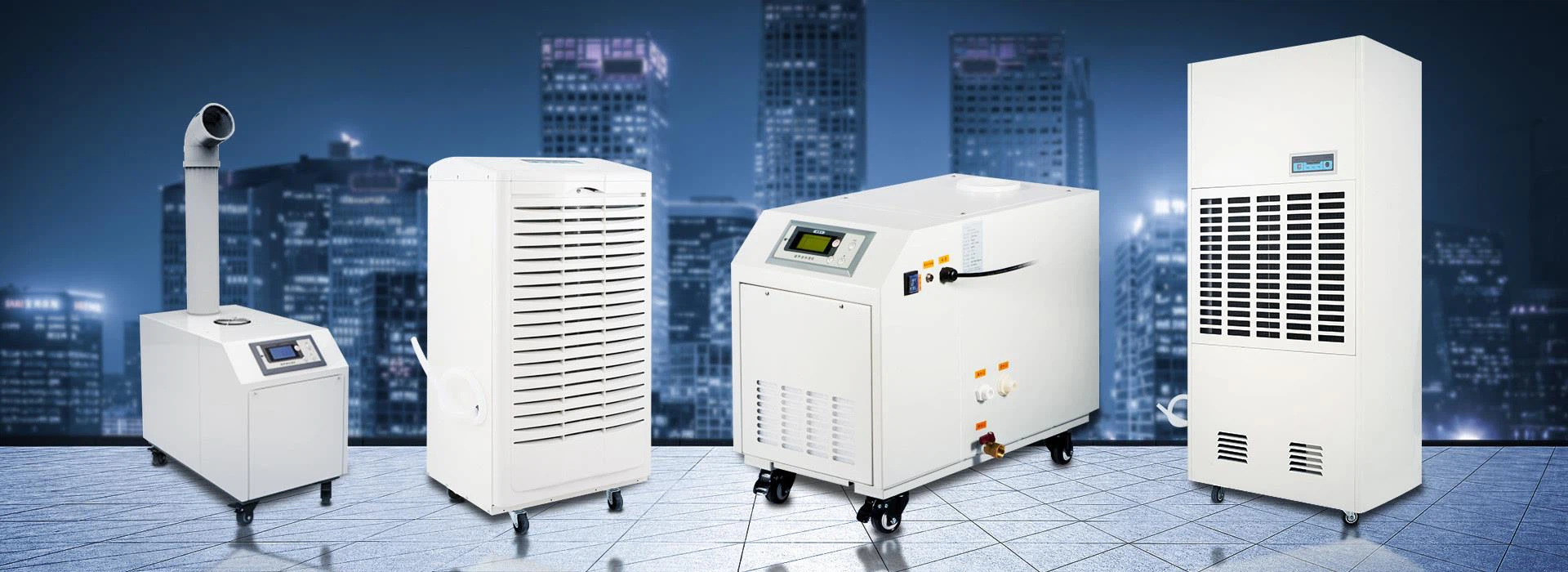
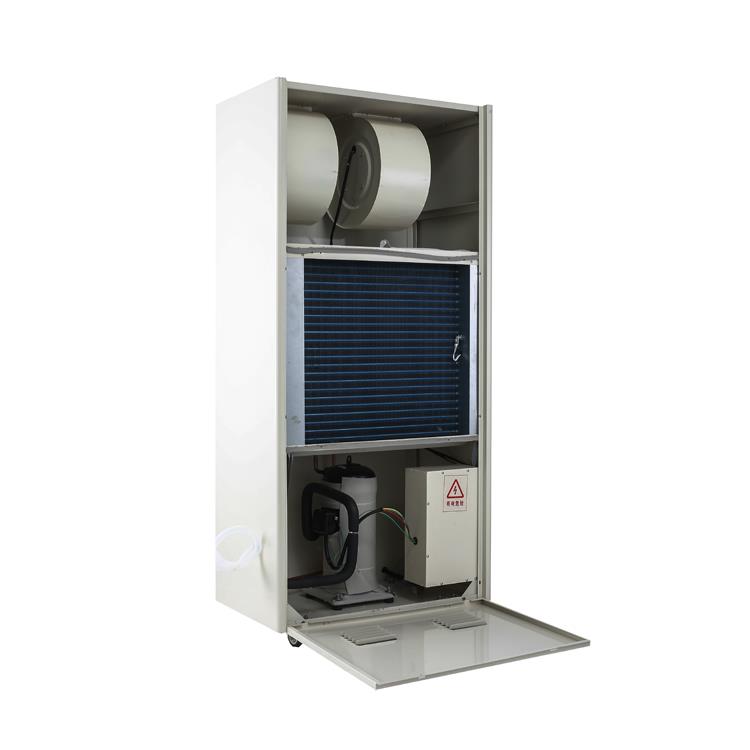
Professional Industrial Dehumidifier
Micro-computer humidity setting, automatic induction, automatic control.
Description
Professional Industrial Dehumidifier


Dehumidifier application in industrial process
Foundry industry
In this process, the wax mold is repeatedly immersed in the clay, and these outer layers form a mold. When the wax is melted, the molten metal can be poured. The dry air (very low vapor pressure) is more commonly used than other heating sources. Dry the clay layer because dry air does not deform the wax pattern. The use of a moisture absorber dehumidifier can stabilize the operating costs of the foundry foundry and increase the manufacturing volume without slowing down the production steps in the wet month, and the process drying time can be shortened by 50%.
Plastic resin drying
All plastic resins have some degree of hygroscopicity. When the plastic raw material particles are in the process of extrusion, moisture is heated and evaporated. These vapours can cause crevices in the plastic structure and appearance. Dehumidifiers reduce the humidity in plastic materials, improve finished product quality, reduce waste and increase manufacturing speed.
Candy wrap
The process of sugar coating is very important for the confectionery industry, it is also a difficult process. The product is placed in a rotating drum, and the material to be coated is sprayed in a rotating drum for about one hour to make the outer layer have a certain thickness. The longer the process, the higher the chance of destroying the product. In the case of chocolate-based or temperature-sensitive formulations, the coated surface can be dried with dry air while the coated material is being sprayed to cool the surface. If the air is pre-dried by the dehumidifier, heat will not be added to the surface of the product and the surface vapor pressure difference will increase. This allows manufacturers to maintain a fixed production rate throughout the year without having to pay attention to changes in outside air.
The object sucks back moisture
Almost every substance has some moisture present, and even plastic resin nylon and other products can absorb moisture of 6 to 10% of its dry weight. In general, this is not a big problem, but sometimes moisture can cause changes in product size and adhesion.
Traditional household salt shakers illustrate this phenomenon. In humid weather, the salt sticks to the can hole due to moisture absorption. This is not a serious problem at the table, but it causes a big problem for the product packaging machine.
Hygroscopic products are more sensitive to relative humidity than absolute humidity, and high relative humidity can occur at any time of the year, in fact often higher in summer than in summer. The problem is particularly acute when the product is stored or manufactured at low temperatures.
Here are some examples of typical industrial processes to prevent moisture reabsorption.
Candy packaging
Candy usually contains marshmallows and glucose, both of which are hygroscopic. When the relative humidity is high, the product will absorb moisture and become sticky. It is easy to stick to the high-speed packaging machine and packaging materials and interrupt the production line. Temperature and humidity control in the candy packaging area is quite economical for the confectionery industry. The standard design conditions for this application are: 35% relative humidity at a comfortable temperature.
Semiconductor and pharmaceutical clean room
When manufacturing microcircuits, a hygroscopic polymer called photoresist is used to etch the resulting reticle circuit traces. If moisture is drawn, the microcircuit will be cut or shorted to cause a circuit failure.
In addition, many powders are hygroscopic substances in the pharmaceutical process. When moisture is high, handling is difficult and storage time is shortened. For these reasons, tight control of relative humidity can increase production speed and maintain product quality. Typical design conditions are 20 ° C and relative humidity of 25%.
Safety glass production
The transparent thin plastic sheet in the safety glass interlayer is extremely hygroscopic. A film that absorbs moisture will generate water vapor bubbles during the process. Closed control relative humidity is very important in this process. The standard design conditions for this application are: 25% relative humidity at comfortable temperatures.
Air transport
Operators of storage and delivery systems are most impressed by the effects of high humidity. Obstruction of the delivery tube, deterioration of product quality and increased maintenance are some of the obvious results. Compressed air increases the likelihood of condensation in the air. When the components in the product absorb moisture, they become sticky and accumulate in the conveyor line, causing the aforementioned results.
In order to solve the above problems, moisture desiccant dehumidification is widely used in the industry as a pre-dry air. The standard design conditions are at any dry bulb temperature with a relative humidity of less than 50%.


Hot Tags: professional industrial dehumidifierChina, manufacturers, suppliers, factory, wholesale
You Might Also Like


